We Know the Risks and We Don't Care: The Psychology Behind America's Password Problem
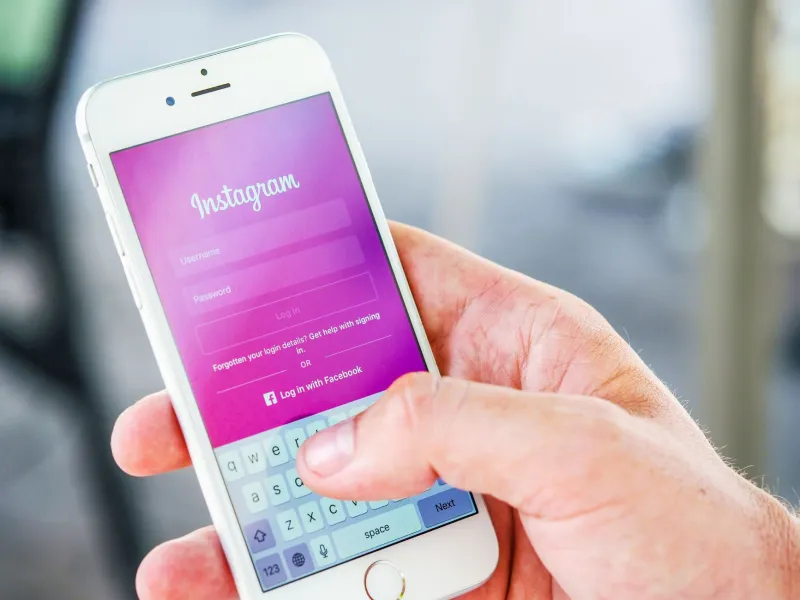
Here's a number that should make you put down your coffee: roughly 65% of Americans reuse passwords across multiple accounts. Not some accounts. Multiple. And that stat isn't pulled from a survey of people who still print out MapQuest directions — it comes largely from people who know better, who've read the headlines, who maybe even got burned before. They just... stopped caring enough to change.
So what's actually going on? We talked to security researchers, behavioral psychologists, and a handful of regular people who've quietly abandoned their password managers to find out why digital security advice keeps bouncing off the American public like a motivational poster nobody reads.
The Friction Is the Problem
Security professionals have a term for it: "security fatigue." And while it sounds like something you'd diagnose with a nap, it's a real, documented psychological phenomenon. When the mental cost of doing the safe thing exceeds the perceived threat of not doing it, most people bail. Every single time.
"We keep designing security systems for the threat model, not the human," says one cybersecurity consultant who's spent years working with mid-size companies trying to get employees to actually use MFA. "And humans are really, really good at avoiding friction."
Think about the last time you set up two-factor authentication on a new app. You had to download an authenticator, or wait for a text, or dig out a backup code you saved in a document you can't find anymore. Now imagine doing that for 47 different logins. That's not paranoia — that's the actual number of accounts the average American manages online, according to recent estimates from NordPass.
Password managers were supposed to solve this. And for a while, a lot of people tried them. But the dropout rate is staggering. Studies suggest that nearly half of users who install a password manager stop using it actively within six months. The reasons range from "it didn't autofill right" to "I switched phones and lost everything" to the most brutally honest answer we kept hearing: "It just felt like more work."
The Optimism Bias Is Quietly Destroying You
Behavioral psychologists have another explanation, and it's a little more uncomfortable to sit with. It's called optimism bias — the deeply human tendency to believe that bad things happen to other people, not us. Car accidents, cancer, identity theft. Sure, those things happen. Just... not to me.
"People intellectually understand that data breaches are common," explains one behavioral researcher who studies how people make risk decisions. "But the emotional weight they assign to it is almost zero, because it hasn't happened to them personally. Until it does, it doesn't feel real."
This is why the statistics don't move the needle. You can tell someone that 1 in 3 Americans has had personal information exposed in a data breach and they'll nod, say "that's wild," and go back to using the same password they've had since college. The data is abstract. The inconvenience of changing behavior is immediate.
What does move the needle, interestingly, is personal exposure. People who've had an account compromised — who've watched their email get hijacked or their Venmo drained — adopt security tools at dramatically higher rates afterward. Trauma is apparently a better teacher than statistics.
So How Bad Is the "Average Person" Approach, Really?
Here's where it gets genuinely surprising. We went in expecting the data to be uniformly grim, and it mostly is — but with some nuance that the standard security lecture tends to skip over.
The risk isn't evenly distributed. If you're a private citizen with no particular public profile, no access to corporate systems, and no crypto holdings sitting in a hot wallet, your threat model looks very different from a journalist, a small business owner, or anyone with a moderately public digital footprint. Security experts will tell you this off the record even when they won't say it in a press release: for a lot of people, the current risk calculus isn't as catastrophic as the headlines suggest.
That doesn't mean reusing passwords is fine. It absolutely isn't. Credential stuffing attacks — where hackers take username/password combos leaked from one breach and try them across hundreds of other sites automatically — are incredibly common and almost entirely automated. You don't have to be targeted. You just have to be in the database.
But the "you will definitely get hacked" messaging hasn't worked. And part of why it hasn't worked is that for millions of people, the predicted disaster hasn't materialized yet. Which feeds right back into the optimism bias. It's a loop.
The Tools Themselves Share Some Blame
Let's be honest about something the security industry doesn't love to admit: a lot of these tools are still genuinely annoying to use. Password managers have gotten better — 1Password, Bitwarden, and Apple's built-in Keychain are legitimately pretty smooth these days — but the onboarding experience for less tech-comfortable users remains a mess.
And two-factor authentication? The implementation varies so wildly that it's almost comedically inconsistent. Some sites let you use an authenticator app. Some only support SMS codes (which, by the way, security experts consider the weakest form of 2FA because of SIM-swapping attacks). Some make you jump through so many hoops to set it up that people give up halfway through and just never finish.
"We've essentially made the secure path the hard path," says one UX researcher who's worked on security product design. "And then we're surprised when people take the easy path instead."
Passkeys — the newer, password-free login technology being pushed by Apple, Google, and Microsoft — represent the most promising shift in years precisely because they're trying to make the secure option easier than the insecure one. Early adoption numbers are cautiously encouraging, but we're still years away from widespread rollout across the messy, fragmented web.
What Actually Works
If the doom-and-gloom approach hasn't changed behavior, what has? Researchers point to a few things that show genuine promise.
First: defaults. When companies make strong security the default — requiring MFA at setup rather than offering it as an opt-in — adoption goes through the roof. People don't disable what they never had to enable.
Second: reducing the blast radius. Even if you're not going to use a full password manager, using a unique password for your email account — the master key to your entire digital life — dramatically reduces your overall risk. Security experts call this "tiered hygiene," and it's a more realistic ask than demanding perfection across 47 accounts.
Third: making it personal. The most effective security training, both in corporate settings and consumer contexts, involves walking people through exactly what happens to them specifically when an account gets compromised. Not statistics. Not hypotheticals. A screen-by-screen walkthrough of the actual experience.
The Bottom Line
The Great Password Rebellion isn't really a rebellion. It's exhaustion. It's a rational-ish response to an irrational amount of friction, wrapped in optimism bias and a genuine failure of the security industry to meet people where they are.
You probably should use a password manager. You really should have MFA on your email and your bank. These aren't bad recommendations — they're just recommendations that have been delivered with all the warmth and practicality of a Terms of Service agreement.
The goal isn't perfect security. It's security that's just slightly less annoying than the alternative. We're getting there. Slowly.