More Connected Than Ever, More Alone Than Ever: The Dark Side of the Social Feed

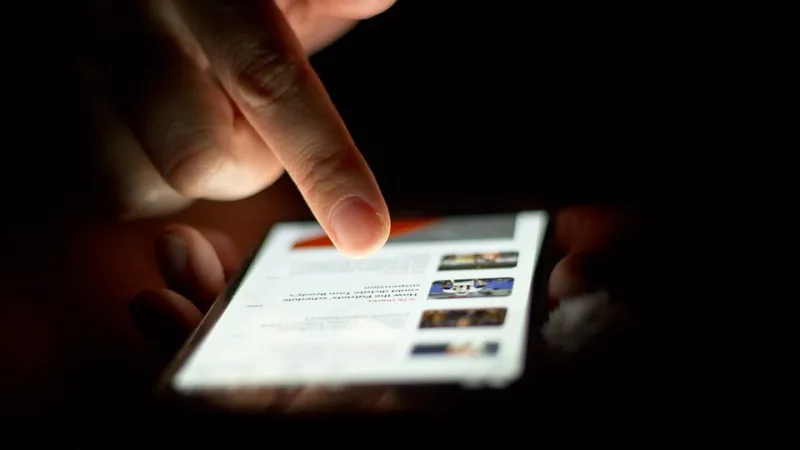
Photo: Lu Zhi, CC0, via Wikimedia Commons
You just spent forty-five minutes on Instagram. You liked a dozen posts, watched a few Reels, maybe tapped through some Stories. And yet somehow — inexplicably — you feel worse than you did before you picked up your phone. More detached. More invisible. More alone.
You're not imagining it. And you're definitely not the only one.
Despite the fact that Americans now spend an average of over two hours a day on social media platforms, rates of loneliness in the US have reached what the Surgeon General officially called an "epidemic" back in 2023. The timing isn't a coincidence. Researchers, psychologists, and behavioral scientists are increasingly pointing to a deeply uncomfortable paradox at the heart of our digital lives: the tools built specifically to connect us may actually be making us feel more disconnected than ever.
The Machine Is Not Your Friend
Here's the thing about social media algorithms — they're not designed to make you feel good. They're designed to keep you on the platform as long as possible. Those are two very different goals, and confusing one for the other is exactly what the platforms are counting on.
Every like, every comment, every notification is a small dopamine hit engineered to pull you back in. But the content that generates the most engagement isn't warm, reciprocal, relationship-building stuff. It's outrage. It's envy. It's the carefully curated highlight reel of someone else's seemingly perfect life that makes yours feel inadequate by comparison.
Dr. Vivek Murthy's landmark advisory on loneliness noted that while technology can facilitate connection, it often substitutes shallow digital interaction for the kind of deep, meaningful engagement that humans actually need to feel whole. Scrolling past a friend's vacation photos is not the same as sitting across from them at a diner booth. The algorithm doesn't know that. Or more accurately — it doesn't care.
Why Watching Isn't the Same as Belonging
One of the most underappreciated dynamics in social media psychology is the shift from participation to observation. In the early days of Facebook and Twitter, the platforms were relatively symmetrical — you posted, your friends posted, everyone talked. But as feeds became curated and algorithmic, the experience shifted toward consumption.
Now, most users are lurkers. Studies consistently show that the majority of social media time is spent passively scrolling rather than actively engaging. And passive consumption, it turns out, is uniquely terrible for your sense of social belonging.
When you watch someone else's life from the outside — their birthday dinner, their promotion announcement, their couple selfie — without being part of it, your brain registers something close to exclusion. Social psychologists call this "social comparison theory," and it's been baked into human cognition for thousands of years. We're wired to measure ourselves against others. Social media just gave that instinct a firehose.
The result? You feel like you're on the outside of a party you weren't invited to. Even if, technically, you could comment. Even if those people are your actual friends.
The Attention Economy's Loneliness Tax
There's also a more systemic issue at play that goes beyond individual psychology. The attention economy — the business model that powers every major social platform — profits directly from your emotional dysregulation. Anxiety, envy, and loneliness all keep you scrolling. Contentment tends to make you put the phone down.
This isn't a conspiracy theory. It's a documented business model. Former insiders at companies like Meta and Twitter (now X) have publicly acknowledged that engagement metrics — time on app, clicks, shares — were prioritized over user wellbeing in product decisions. The features that made platforms stickier often made users feel worse.
Notifications are a perfect example. That little red badge on your app icon is a deliberate design choice modeled on variable reward schedules — the same psychological mechanism behind slot machines. It creates a compulsive checking behavior that fragments your attention and keeps you in a constant low-grade state of social anxiety. Am I missing something? Did someone respond to me? Does anyone care?
That loop, played out dozens of times a day, is exhausting in a way that's hard to articulate but very easy to feel.
Real Connection Still Exists — But You Have to Fight for It
None of this means you need to delete every app and move off the grid. But it does mean that genuine connection in 2024 requires some intentionality that previous generations didn't need.
Researchers who study social wellbeing offer a few principles worth keeping in mind:
Go direct, not broadcast. A DM or a text to one specific person beats posting for a general audience almost every time. Broad social broadcasting feels like connection but rarely produces it. One-on-one or small-group conversations do.
Engage actively, not passively. Comment. Reply. Start a thread. Passive scrolling is the loneliness accelerant — active participation is at least a partial antidote. It won't fully replace in-person interaction, but it's meaningfully better than lurking.
Schedule the offline stuff like it's a meeting. Research from the Harvard Study of Adult Development — one of the longest-running studies on human happiness — found that the quality of close relationships is the single strongest predictor of wellbeing over a lifetime. Those relationships don't maintain themselves through Instagram. They require actual time, in actual rooms, with actual people.
Audit your feed ruthlessly. The accounts that consistently make you feel bad about yourself aren't neutral background noise. They're actively eroding your sense of belonging. Unfollow them. The algorithm will adjust.
The Curated Life vs. The Actual One
Maybe the most honest thing we can say about social media and loneliness is this: the version of connection these platforms sell is a simulation. It looks like community. It feels like community, sometimes, briefly. But it's optimized for engagement, not for the messy, slow, unglamorous work of actually knowing and being known by other people.
The algorithm knows you're scrolling at 11pm. It knows what makes you stop and stare. What it doesn't know — what it can't know — is what you actually need.
That part is still up to you.