Your Feed Saw It Coming Before You Did — Here's the Creepy Science Behind That
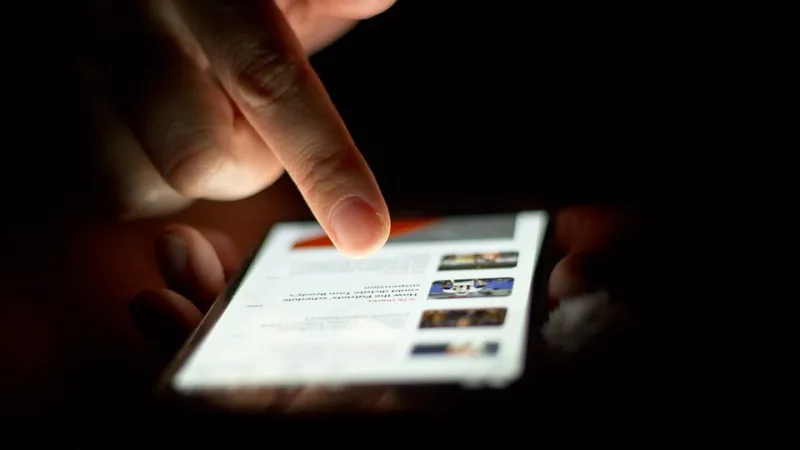
Photo: Japanexperterna.se, CC BY-SA 2.0, via Wikimedia Commons
You're lying on the couch on a Tuesday night, half-watching something on Netflix, mindlessly scrolling Instagram. A reel pops up for a niche documentary about competitive chess. You don't stop — you keep scrolling. But something in your brain flickered. Maybe you paused for 0.8 seconds longer than usual. Maybe your thumb slowed down just a little.
The algorithm noticed.
By Thursday, your feed is peppered with chess content, strategy game ads, and a Spotify playlist called "Focus & Flow." You didn't ask for any of it. You didn't even know you wanted it. But here's the wild part — you kind of do.
This is the world we're living in right now, and it's worth understanding exactly how we got here.
The Machine Learned Faster Than We Expected
Recommendation algorithms have been around for decades in some form. Amazon was using rudimentary "people who bought this also bought" logic back in the late '90s. But what exists today is something fundamentally different. These systems are no longer just matching your stated preferences — they're modeling your psychology.
Platforms like TikTok, YouTube, and Spotify don't just track what you click on. They track what you almost clicked on. They measure how long your eyes linger on something before you swipe. They factor in time of day, your device's battery level, how fast you're scrolling, and even the emotional valence of content you recently engaged with. TikTok's algorithm, widely considered the most aggressive in the industry, can reportedly build an accurate interest profile within the first 30 to 40 videos a new user watches — sometimes less.
Meta's internal research, portions of which became public during congressional hearings in 2021, revealed that their systems were optimizing not just for engagement, but for emotional states that increased engagement. Outrage, anxiety, and social comparison all kept people on the platform longer. The algorithm didn't care whether you felt good. It cared whether you stayed.
The Data Points You Probably Don't Think About
Most people assume these platforms are tracking obvious stuff — your likes, your follows, your searches. And yes, they are. But the data goes much deeper than that.
Here's a partial list of what these systems are actually pulling from your behavior:
- Scroll velocity: How fast or slow you move through content signals interest or disinterest more honestly than a like ever could.
- Replay behavior: Watching a video twice — even accidentally — registers as strong positive signal.
- Share hesitation: Platforms can detect when you open the share menu and then close it without sharing. That moment of consideration still counts as engagement data.
- Cross-platform signals: Many apps share data through advertising networks. Something you searched on Google can influence what you see on YouTube, which can bleed into Instagram. It's a connected ecosystem, not isolated silos.
- Demographic inference: Even if you never told an app your age, income bracket, or relationship status, behavioral patterns allow systems to infer these with startling accuracy.
The result is a version of you that exists inside a server somewhere — a behavioral model that, in some narrow but genuinely unsettling ways, knows your next move before you make it.
What Filter Bubbles Actually Do to Your Brain
The term "filter bubble" was coined by internet activist Eli Pariser back in 2011, and it's become a bit of a buzzword. But the underlying concept is real and worth taking seriously.
When an algorithm curates your world, it naturally gravitates toward content that confirms what you already believe, reinforces what you already like, and keeps you emotionally activated. Over time, this creates an increasingly narrow slice of the internet that feels like the whole internet. You start to mistake your curated feed for reality.
This has documented effects on political polarization — studies from places like MIT and Stanford have shown that algorithmic amplification plays a measurable role in hardening partisan views. But it also affects more mundane things: your taste in music, your opinions about food, your sense of what's normal to own, wear, or aspire to. The algorithm doesn't just reflect your identity — it quietly shapes it.
So How Do You Actually Push Back?
Here's the good news: you're not powerless. The algorithm is powerful, but it's also reactive. Change your inputs, and you'll change your outputs. Here are a few strategies that actually work.
Deliberately consume content that confuses the algorithm. Watch a video about a topic you have zero prior interest in. Follow an account that's completely outside your usual sphere. The system will scramble to recalibrate, and in that scramble, you'll often find genuinely interesting stuff you never would have found otherwise.
Use platform controls more aggressively than you think you need to. YouTube lets you clear your watch history and pause tracking. Spotify has a "private session" mode. TikTok allows you to reset your feed. These tools exist — most people just never use them.
Separate your browsing contexts. Use one browser for casual scrolling and a different one for research or shopping. This limits cross-contamination between your data trails and makes it harder for ad networks to stitch together a complete profile.
Try RSS feeds for news. It sounds old-school because it is, but RSS readers like Feedly or Inoreader pull content from sources you choose, in the order it was published, with no algorithmic interference. It's a genuinely different experience of the internet.
Schedule your social media time. Instead of passively dipping in and out all day — which maximizes the algorithm's influence over your mood and attention — set two or three specific windows for checking feeds. You'll engage more intentionally and feel the pull of the scroll less acutely.
You Still Get to Choose — Sort Of
It would be easy to read all of this and feel like you're just a variable in someone else's equation. And look, there's some truth to that. These systems are built by some of the most sophisticated engineering teams on earth, optimizing for goals that don't always align with your wellbeing.
But the algorithm is also a mirror. It reflects what you actually do, not just what you say you want. And that means changing your behavior — even slightly — genuinely changes what you see.
At DNRWS, we're big believers in being intentional about what you let into your daily information diet. The feed you have right now isn't inevitable. It's just the result of choices you've already made, and it can be reshaped by the choices you make next.
That's either unsettling or empowering, depending on how you look at it. We'd suggest going with empowering.