Logging Off on Purpose: The Americans Who Chose Their Brain Over the Feed
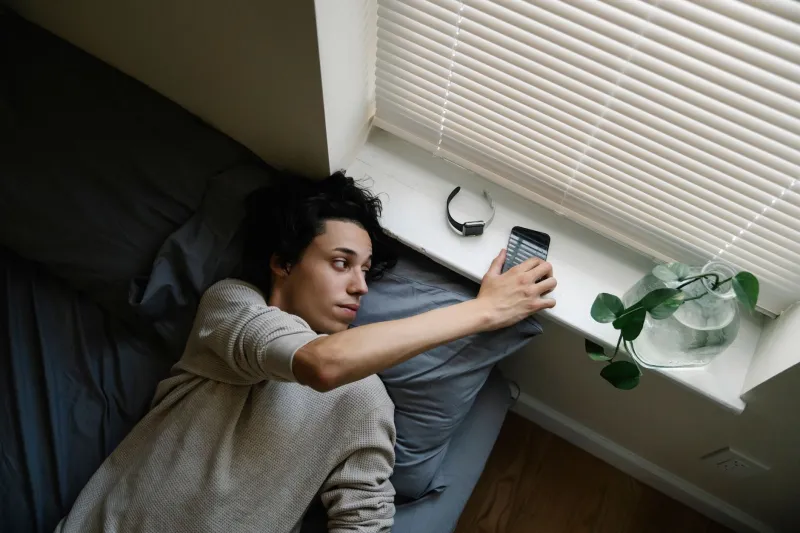
Somewhere between the fourteenth reel of a stranger's vacation and the third unsolicited opinion about a celebrity beef you didn't ask about, something clicked for Danielle Marsh. The 31-year-old nurse from Columbus, Ohio wasn't having a breakdown. She wasn't getting divorced or going through a quarter-life crisis. She was just... tired.
"I looked up and it was 1:15 in the morning," she told us. "I'd been on my phone for two hours and I couldn't tell you a single thing I actually saw."
So she put the phone down. And then she did it again the next night. And the night after that.
What Danielle stumbled into has a name: digital minimalism. And in 2024, it's less of a fringe lifestyle experiment and more of a full-on cultural shift.
It's Not a Detox. It's a Decision.
Here's what separates this wave from every other "I'm taking a social media break" announcement you've seen posted to — yes — social media. The people driving this movement aren't running away from anything. They're running toward something. That distinction matters more than it sounds.
Dr. Priya Anand, a behavioral psychologist based in Chicago who works with clients on attention and habit formation, puts it plainly: "A detox implies you'll go back. What we're seeing now is people making a conscious, values-based decision about how they want to spend their cognitive energy. That's fundamentally different."
The infinite scroll was, of course, engineered to be unbeatable. Platforms don't hide this anymore — former insiders have written books about it, testified before Congress about it, made documentaries about it. The variable reward loop, the dopamine drip, the way your thumb keeps moving even after your brain has checked out. It's not a design flaw. It's the whole product.
Knowing that, apparently, is finally starting to matter.
What the Numbers Actually Say
A 2023 Gallup survey found that nearly 4 in 10 Americans said they were actively trying to reduce their time on social media — not because they were told to, but because they wanted to. Separate research from the American Psychological Association flagged "social media fatigue" as a growing stressor, particularly among adults aged 25 to 44, the demographic that grew up with Facebook and has been white-knuckling the transition to every platform since.
Screen time data tells a murkier story. Average daily usage in the U.S. still hovers around seven hours of total screen time, and social media alone accounts for roughly two and a half of those hours. But the quality of that engagement is shifting. More people are using timers, app limits, and grayscale mode — all those little friction tricks that make the phone slightly less seductive.
Tech critic and author James Calloway, who has spent the last decade writing about attention economics, sees something genuinely new happening. "For years, awareness wasn't enough to change behavior. People knew cigarettes were bad for decades before the quitting rates changed. We might be hitting that inflection point with social media now."
What You Actually Gain (Besides Time)
Ask anyone who's successfully dialed back their consumption and you'll hear a version of the same thing: the first week is rough, the second week is weird, and by the third week, something quietly shifts.
Marco Rivera, a 27-year-old graphic designer in Austin, deleted TikTok and Instagram off his phone six months ago. He still has the accounts — he just doesn't carry them around anymore. "The first thing I noticed was that I started finishing books again. Like, actual books. I'd forgotten I used to do that."
That tracks with what researchers have been documenting. Sustained reading, deep focus work, and even face-to-face conversation all appear to benefit when the competition from short-form content is removed. Dr. Anand describes it as "attention rehabilitation" — the brain, when given the chance, recalibrates toward longer reward cycles.
The unexpected side effect? Boredom. Real, unmedicated boredom. And for a lot of people, that turns out to be the good stuff.
"Boredom is where creativity lives," says Calloway. "We've basically been strip-mining that mental space for engagement metrics. When people get it back, they don't always know what to do with it at first. Then they start making things, thinking things, noticing things."
The Challenges Nobody Warns You About
Let's be honest, though — opting out isn't frictionless. Social media is now so deeply woven into American social infrastructure that stepping back carries real costs.
Event invitations live on Facebook. Breaking news breaks on X. Job opportunities surface on LinkedIn. Friend groups coordinate through Instagram DMs. Pulling back from the feed doesn't just mean fewer cat videos; it can mean genuinely missing things that matter.
Danielle, the nurse from Columbus, admits she's missed a few things since scaling back. "There was a birthday party I didn't know about because the invite was on Instagram Stories. That stung a little." She pauses. "But I also slept eight hours for the first time in years, so."
There's also the social pressure angle. In certain circles, being chronically online is still a badge of relevance. Not knowing the latest discourse, the trending audio, the meme that's been dead for two weeks but somehow keeps circulating — that can feel like showing up to a party and not speaking the language.
But that pressure, too, seems to be softening. "I've had clients tell me their friends are actually relieved when someone in the group admits they're not on it as much," says Dr. Anand. "There's permission-giving happening. One person stepping back makes it easier for others to."
Curation as a Form of Self-Respect
What's interesting about the digital minimalism crowd is that most of them aren't anti-technology. They're not smashing their iPhones or preaching about going off the grid. They're doing something more nuanced: they're curating.
The same instinct that drives someone to carefully choose what's on their bookshelf, what's in their fridge, or who they spend Saturday afternoon with is now being applied to the content diet. Less volume, more intentionality. The algorithm wants to decide what you see next. These people want that job back.
Marco put it in terms that felt almost obvious once he said it: "I used to let the app decide what was worth my time. Now I decide. It's a small thing but it changed everything."
That framing — reclaiming decision-making authority over your own attention — is at the heart of what makes this movement feel different from previous cycles of digital hand-wringing. It's not about fear. It's not about outrage. It's about ownership.
The Feed Will Always Be There. Will You?
The platforms aren't going anywhere. The scroll isn't getting shorter. The engineers building the next generation of recommendation engines are, if anything, getting better at their jobs.
But so, apparently, are the people deciding not to play.
For Danielle, the shift has been gradual and imperfect. She still checks her phone too much some days. She still gets pulled into comment sections she swore she'd ignore. But the relationship has changed. "It's like I finally realized I was allowed to just... not," she says. "Nobody was making me do this. I was doing it to myself."
That's the uncomfortable truth at the center of all of this. The algorithm is powerful. But so is the decision to look away.
And in 2024, more Americans than ever are making it.